The Barrio de las Letras fills the triangle between Puerta del Sol, Carrera de San Jerónimo, Paseo del Prado and Calle Atocha. In the 16th and 17th centuries it was called the Barrio de las Musas, and within a handful of blocks Cervantes, Lope de Vega, Quevedo and Góngora lived at the same time, admiring and loathing each other in equal measure. This route follows what is left of them on the street, in the order you would walk it, and ends with what to do once you have seen the main sights.
It takes two to three hours at an easy pace, not counting a visit to the Lope de Vega House Museum. The nearest metro stations are Sol, Antón Martín and Sevilla.
Three Ways to Explore the Neighbourhood
| Live CluedoTHE GAME X | Free tour | On your own | |
|---|---|---|---|
| What you do | Solve a murder | Listen to the guide | Walk this route |
| Actors | Suspects in the street | No | No |
| History | Audio guide at each stop | A live guide | What you read here |
| Vermouth | Included | No | On your own |
| Language | English or Spanish | Several | Yours |
| Price | 30 € | Tip | Free |
1. Plaza de Santa Ana
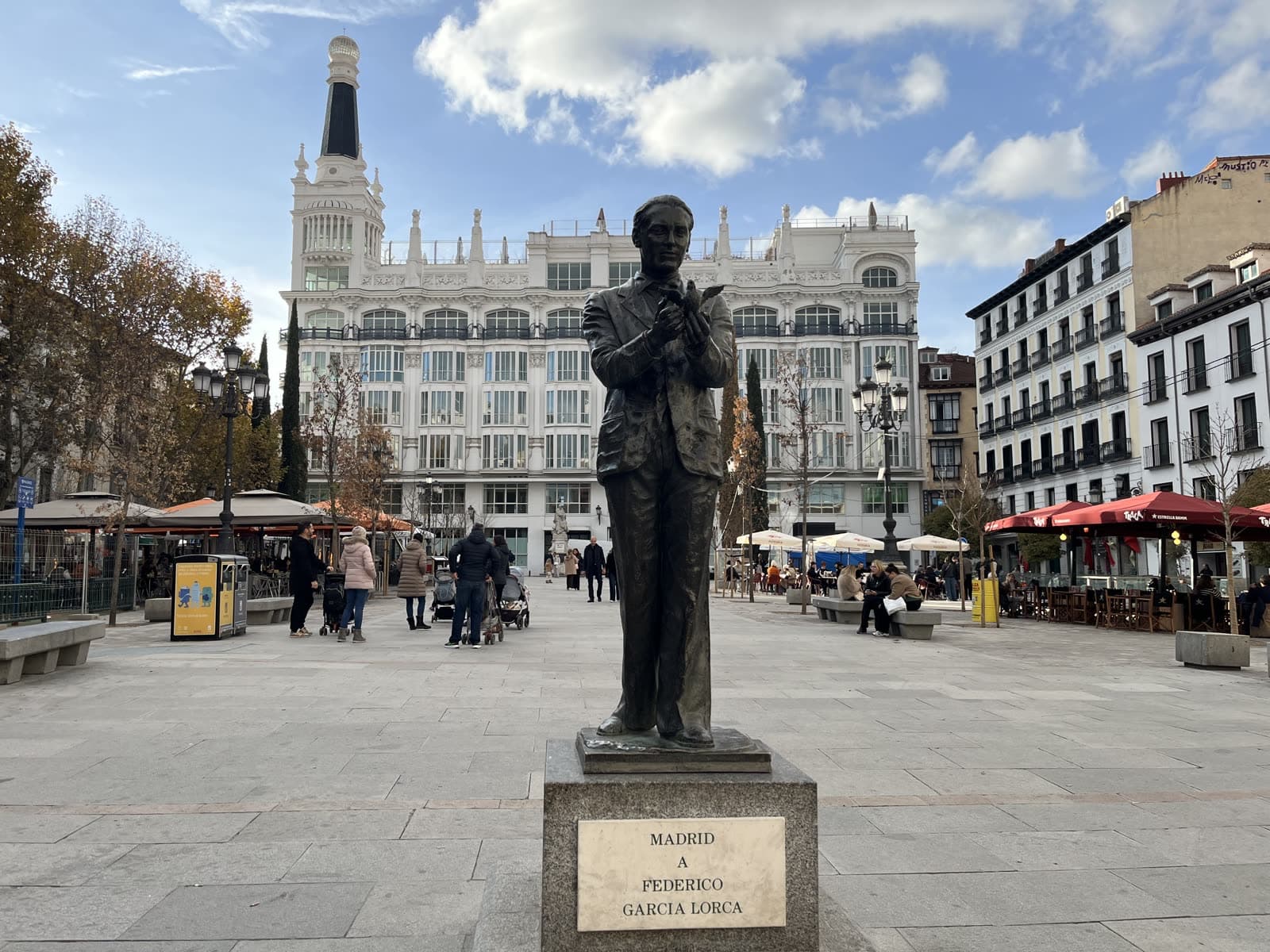
It is the natural starting point because almost every street in the neighbourhood begins here. On one side stands the Teatro Español, built on the site of the Corral del Príncipe, where the comedies of the Golden Age premiered. In front of the theatre, the bronze statue of Federico García Lorca holds a bird in his hands, and across the square is the statue of Calderón de la Barca. The terraces and old beer halls do the rest, and at midday they fill with people having an aperitivo.
2. The Taverns and the Callejón del Gato
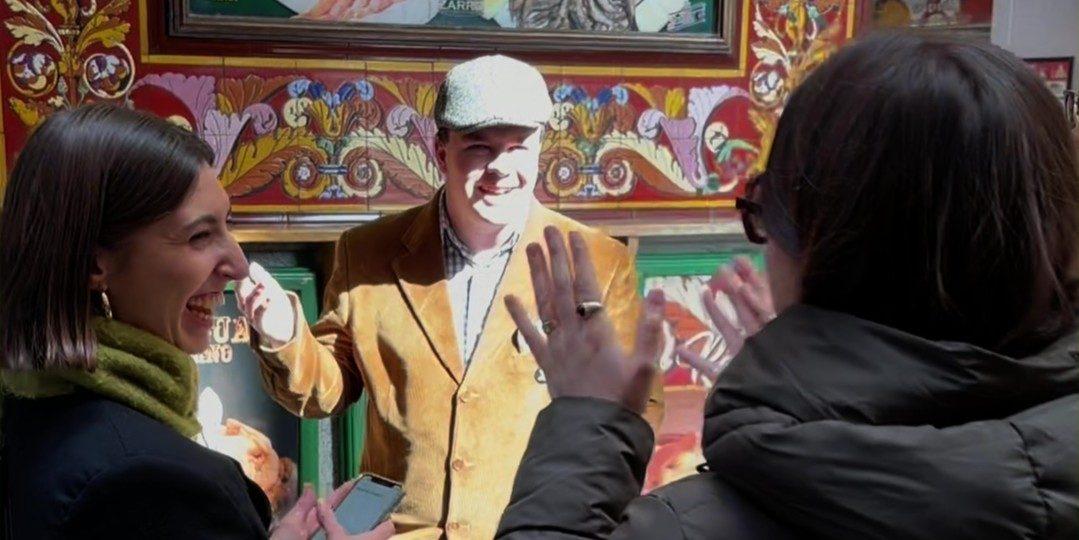
A few steps from the square is Calle de Álvarez Gato, the "Callejón del Gato" where Valle-Inclán placed the concave mirrors of Luces de bohemia. Today a set of distorting mirrors on one façade recalls the scene. The streets around it, such as Echegaray, keep taverns with painted tile façades that are worth a photo even if you don't go in. The most famous is Los Gabrieles, at Echegaray 17, which reopened in April 2026 after more than twenty years closed.
3. Church of San Sebastián
On Calle Atocha, the church of San Sebastián has a plaque that reads "Lope de Vega was buried here". The past tense has a story behind it, because his remains were moved to an ossuary and today nobody knows where they are. The parish books also keep the death record of Cervantes.
4. Calle de las Huertas
Huertas runs down from the Santa Ana area to Paseo del Prado, and along the way its pavement is studded with bronze-lettered quotes from Cervantes, Lope, Quevedo, Góngora and other writers. Keep looking down, because it is easy to walk over them without reading them. By day it is a street for strolling and shopping; at night it becomes one of the liveliest bar areas in the centre.
5. The House Where Cervantes Died
On the corner of Calle de León and Calle de Cervantes, a plaque above the door reads "Here lived and died Miguel de Cervantes Saavedra, whose genius the world admires". The original house was demolished in the 19th century, but the medallion with his portrait and the plaques mark the exact spot. He died here in 1616, a few months after publishing the second part of Don Quixote.
6. Lope de Vega House Museum
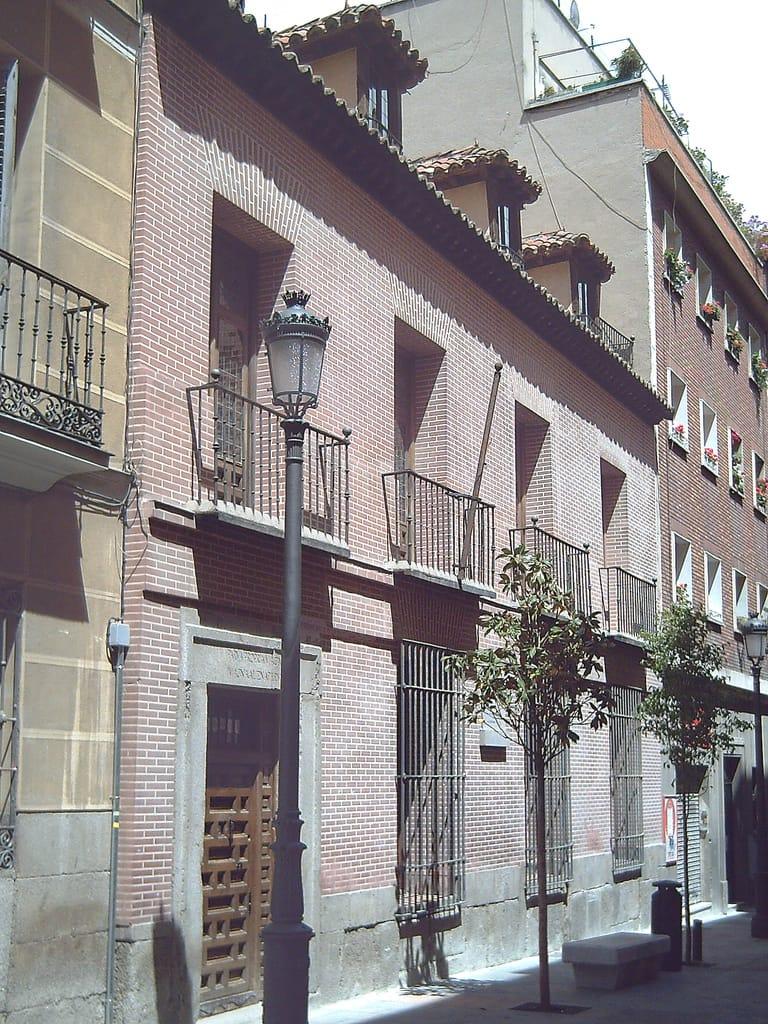
Further down Calle de Cervantes, at number 11, is the house where Lope de Vega spent his last 25 years. It is the only home of a great Golden Age writer still standing in the neighbourhood, and you can visit the inside, with his study, his oratory and the small garden he looked after himself. Entry is free, but you need to book the visit on the museum's website, and groups are small.
7. Convent of the Trinitarias Descalzas
One street further down, on Calle de Lope de Vega, is the convent where Cervantes was buried in 1616. The crossing has its irony, because Cervantes rests on the street named after his great rival and Lope lived on the one named after Cervantes. In 2015 a team of researchers found remains attributed to the writer in the crypt, and today a funerary monument honours him in the church. It is still an enclosed convent, so the church only opens at service times.
8. Ateneo de Madrid
Heading back north, on Calle del Prado, is the Ateneo de Madrid, founded in 1835 and a meeting place for generations of writers and politicians. The wrought-iron door alone is worth the stop, and its programme of talks and book launches often includes events open to the public.
9. Congreso de los Diputados
The route ends on Carrera de San Jerónimo, the northern edge of the neighbourhood, in front of the Spanish parliament. According to tradition, the two lions on its steps were cast from the bronze of cannons captured in the Hispano-Moroccan War. From here, Paseo del Prado and the Prado Museum are five minutes away.
Things to Do in the Barrio de las Letras Once You Have Seen It
The neighbourhood is more than façades. A few ideas for staying a while longer:
- Have a vermouth in one of the taverns of Huertas or Santa Ana. At weekend lunchtime, half of Madrid is doing exactly that.
- Watch a film at Cine Doré, the Spanish Film Archive's cinema, across Calle Atocha next to Antón Martín. The building is modernist, tickets cost very little and in summer it opens an open-air cinema terrace.
- Listen to live jazz at Café Central, on Plaza del Ángel, right next to Santa Ana. There is a concert almost every night.
- Browse second-hand bookshops and small shops on Calle de León, Huertas and Lope de Vega.
Exploring the Neighbourhood as a Game
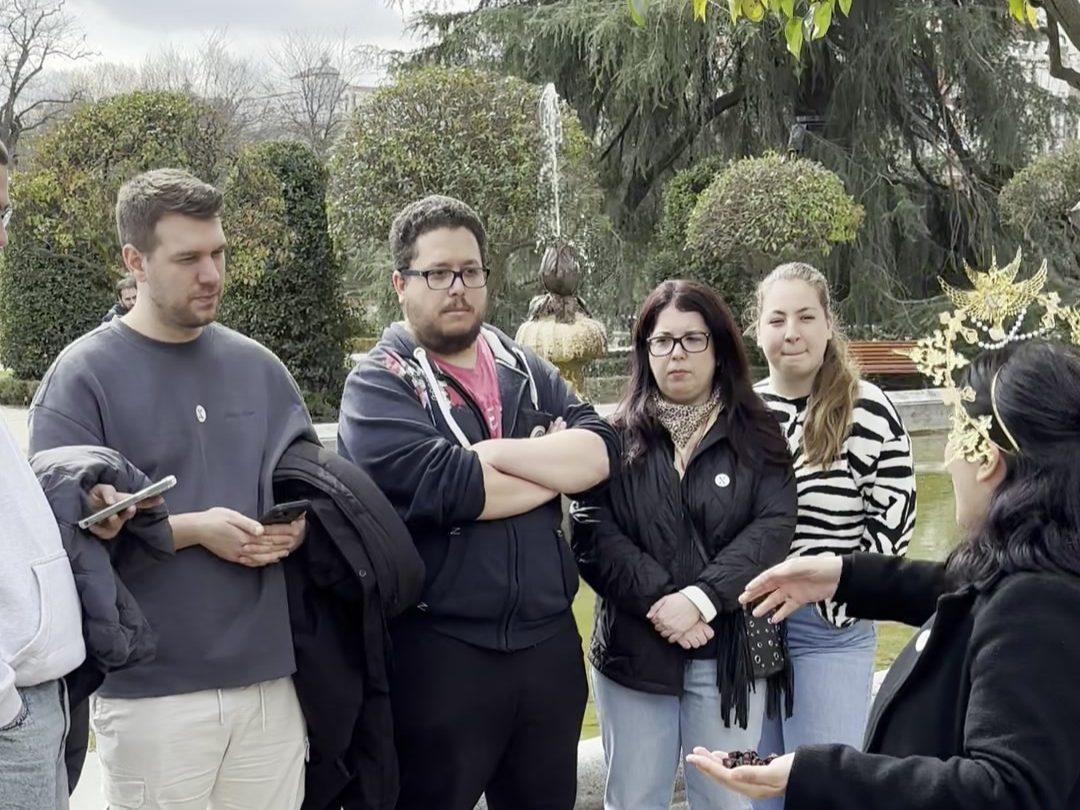
If you would rather have a reason to step into every corner, our live Cluedo in the Barrio de las Letras turns this route into a case to solve. It is 1950s Madrid, a collector is found dead with an unpublished Lope de Vega manuscript involved, and the five suspects are actors you question in the street. It lasts about two hours, starts at Plaza de Santa Ana, includes a vermouth in one of the bars on the route, and there are sessions every day, in Spanish or English.
Tips for Your Visit
- Wear comfortable shoes. Huertas and Calle de Cervantes slope, and several stretches are cobbled.
- Book the Lope de Vega House Museum in advance, especially at weekends.
- For photos without crowds, go in the morning. For atmosphere, go after eight in the evening.
- Everything is less than ten minutes' walk from Sol, so it pairs well with the Prado or the Retiro.
The Route in Brief
| Stop | What to look for |
|---|---|
| 1. Plaza de Santa Ana | The Teatro Español and the statues of Lorca and Calderón |
| 2. Callejón del Gato | The mirrors of Luces de bohemia and the tavern tiles |
| 3. San Sebastián | The Lope de Vega plaque |
| 4. Calle de las Huertas | The bronze quotes in the pavement |
| 5. Calle de León | The medallion on Cervantes's house |
| 6. Lope de Vega House Museum | His study and garden, booking needed |
| 7. Trinitarias Descalzas | Where Cervantes is buried |
| 8. Ateneo de Madrid | The wrought-iron door |
| 9. Congreso | The bronze lions |
| And to play it | Live Cluedo, 2 hours with vermouth |
Frequently asked questions about the Barrio de las Letras
What to see in the Barrio de las Letras? Plaza de Santa Ana, the quotes set into the pavement of Calle de las Huertas, the plaque of Cervantes's house on Calle de León, the Lope de Vega House Museum, the Trinitarias convent where Cervantes is buried and the Ateneo de Madrid.
What to do in the Barrio de las Letras? Besides the walking route, you can have a vermouth in its taverns, watch a film at Cine Doré, listen to jazz at Café Central or play a live Cluedo through its streets.
How long does it take to explore? Two to three hours walking at an easy pace. With a visit to the Lope de Vega House Museum, allow half a morning or half an afternoon.
Why is it called the Barrio de las Letras? Because in the 16th and 17th centuries the great writers of the Spanish Golden Age lived here, among them Cervantes, Lope de Vega, Quevedo and Góngora.
If you want to know more about who lived here and how they got on, read the history of the Barrio de las Letras. And if you are planning a trip to the city, take a look at the must-sees of Madrid.